3rd International TCM4.0 Laser Acupuncture Conference
with ASLAT on May 23-24th, 2026:
Where TCM Meets the Ancient Power of Light for Powerful Patient Outcomes.
Leaders in the field of laser acupuncture will show you in real, practical terms how to focus the power of light in your TCM treatments – using the right dose, the right point, the right applications, and the tools now available to us.
Plus 9 CEU from NCCAOM* and CAB
TCM 4.0 Live Virtual Conference is happening May 23-24, 2026
Presented by the American Society for Laser Acupuncture Therapy (ASLAT)
Dive into the most impactful advancement in acupuncture since the stainless steel needle, and learn from leaders in the field.
This isn’t just an event; it’s a pivotal moment that opens the doors to entirely new acupuncture-based therapies with the ability to heal at a level not possible before.
This conference will not only enrich your practice and patient outcomes, but also empower you to stand out in an ever-competitive healthcare landscape, offering solutions that many practitioners (in TCM 3.0) cannot.
The TCM you love given a superpower – where laser and PBM (photobiomodulation) reach deeper into the body and activate more profound physiological effects.
And you’ll see how you can combine it with integrative and regenerative therapies that further enhance what’s possible for your patients – from pain to Parkinson’s to macular degeneration.
Decades of PBM research and clinical results are in place, and the applications are only going to grow from here.
Now’s the time to catch this wave, giving you an early advantage to grow your practice and expand your capacity to heal as an acupuncturist.
Discover the research, the therapies, the case studies, the past and future of PBM/LAT, and so much more that you can take directly into your practice. Plus practice management and marketing strategies.
Join the 2026 Conference, May 23-24th
Including 9 CEU from NCCAOM* and CAB
2026 TCM 4.0 Conference Agenda
Presented by
Day 1: Saturday, May 23rd, 2026 (Times in PST)
8:30–9:00 am
Online Check-in
9:00–9:05 am
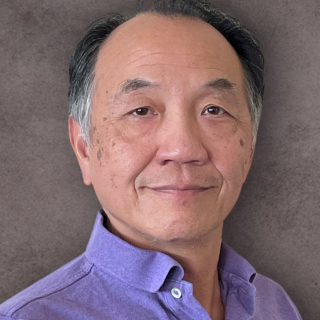
President Welcome and Introduction
Steve Liu, L.Ac., BSEE (USA)
9:05–10:00 am

Laser Acupuncture: History, Today, and the Future
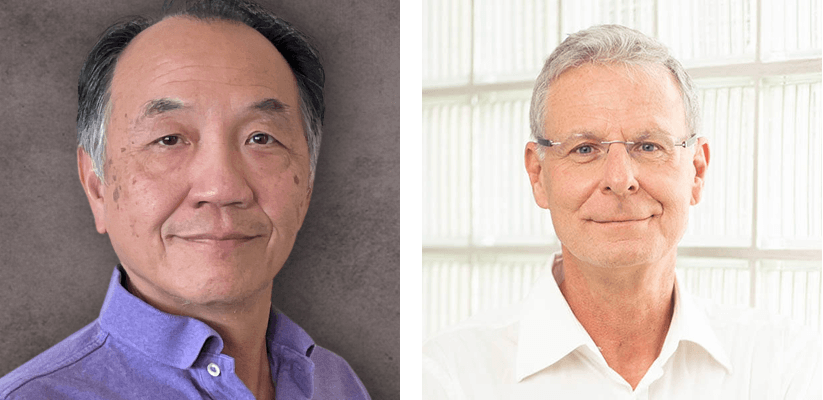
Gerhard Litscher, PhD, MDsc (Austria/Switzerland)
1 CEU*
10:00–11:00 am

Current Laser Acupuncture Research & Clinical Applications
Volkmar Kreisel, MD (Germany)
1 CEU*
11:00 – 11:30 am
Live Q&A and Panel Discussion
Gerhard Litscher, PhD and Volkmar Kreisel, MD
0.5 CEU*
11:30–12:30 pm
TCM4.0 & Chronic Soft Tissue Pain Treatment Protocol Introduction
Steve Liu, L.Ac., BSEE (USA)
1 CEU*
12:30–1:00 pm
Break
1:00–2:00 pm
Integrative Approach for Chronic Soft Tissue Pain Treatment – Chronic Shoulder Tendonitis
Steve Liu, L.Ac., BSEE (USA)
1 CEU*
2:00 pm
First Day Conference Adjourns
Day 2: Sunday, May 24th, 2026 (Times in PST)
8:30–9:00 am
Online Check-in
9:00–10:00 am
Age-Related Macular Degeneration with TCM4.0 and Danish A2K Technique and German Laser Acupuncture Approach Comparison
Steve Liu, L.Ac., BSEE and Volkmar Kreisel, MD
1 CEU*
10:00–11:00 am
Integrative Approach for Parkinson’s Disease with TCM4.0, tPBMT, and Lifestyle Medicine
Steve Liu, L.Ac., BSEE (USA)
1 CEU*
11:00–12:00 pm
Integrative Protocol with TCM4.0 to Treat Peripheral Neuropathy, Chronic Lower Back Pain, and Sciatica
Steve Liu, L.Ac., BSEE (USA)
1 CEU*
12:00–12:30 pm
Break
12:30–1:30 pm
TCM4.0 Clinical Practice Management
Steve Liu, L.Ac., BSEE and Volkmar Kreisel, MD
1 CEU*
1:30–2:00 pm
Live Q&A and Closing Remarks
Steve Liu, L.Ac., BSEE; Gerhard Litscher, PhD; and Volkmar Kreisel, MD
0.5 CEU*
2:00 pm
ASLAT 3rd TCM4.0 Conference Adjourns – See You Again in 2027!

Steve offers unique perspective and practice protocols to the Traditional Healing arts profession of Acupuncture.
By merging his scientific training and accomplishments in laser engineering with his longstanding successful Chinese Medicine Practice, he has managed to bridge both worlds to create a holistic, powerful, expedient “FAST” and complete method of balancing and healing the body.
He is also most generous with his time and knowledge. I cannot recommend more to any practitioners that they up their game and knowledge base to study and embrace his techniques in daily practice. Once you know, you cannot go back.
– M.A. (L.Ac. & D.C.)
Conference Speakers
Steve Liu, L.Ac., BSEE
USA
Full Credentials
Steve Liu is a licensed acupuncturist from Tucson, Arizona, USA. He was also an electrical and laser engineer in Silicon Valley, with a degree in electrical engineering from San Jose State University, USA. He has combined photobiomodulation (PBM) therapy with acupuncture to treat acute and chronic pain conditions since 2000.
He is the inventor of the FAST Protocol for treating chronic soft-tissue pain and curing it in less than ten treatments.
Steve has been a member of the North American Association for Photobiomodulation Therapy (naalt.org) since 2001 and served as its president from 2008 to 2010. He was the President Emeritus of the Arizona Society of Oriental Medicine and Acupuncture.
Since 2010, he has also served as a board member of the International Society for Medical Laser Applications (isla-laser.org) and, since 2025, as a member of the Scientific Advisory Board of the Korean Medical Association for Integrative Laser Therapy (kmalt.org).
He founded the American Society for Laser Acupuncture Therapy (aslat.org) and has served as its president since 2006.
He has developed treatment protocols that integrate Chinese Medicine, PBM Medicine, Functional Medicine, and Lifestyle Medicine to successfully treat chronic pain, peripheral neuropathy, age-related macular degeneration, autoimmune diseases, and the slow progression of Parkinson’s disease. He calls this unique integrative approach “TCM4.0,” or the fourth generation of Traditional Chinese Medicine (tcm4point0.com).
Steve retired after more than twenty-five years of practice in July 2025. He is now dedicated to passing on his clinical skills through TCM4.0 and the FAST treatment protocols to future generations of healing practitioners through his online school, HanLin Center for Integrative Medicine (hanlincim.com).
Contact: steve@aslat.org
Gerhard Litscher, PhD, MDsc
Austria/Switzerland
Full Credentials
Honorary President of ASLAT
Gerhard Litscher, Univ.-Prof. MSc PhD MDsc, currently (2024) holds a position as a full professor at the Swiss University of Traditional Chinese Medicine (SWISS TCM UNI) in Switzerland/Europe, where he specializes in High-Tech Acupuncture and Digital Chinese Medicine.
He is President of the International Society for Medical Laser Applications (ISLA transcontinental, since 2012), German Vice President of the German-Chinese Research Foundation (DCFG, since 2014) for Traditional Chinese Medicine (TCM), Vice Chairperson of World Federation of Chinese Medicine Societies (Committee of Card. Rehab. (2023-2028)), Honorary President of the European Federation of Acupuncture and Moxibustion Societies (2023), Honorary Professor of China Beijing International Acupuncture Training Center, China Academy of Chinese Medical Sciences (2023) and Chairman of Consensus Guidelines for Laser Acupuncture of the World Association for photobiomoduLation Therapy (WALT). He is a member of the expert panels of the World Health Organization (WHO) for acupuncture and related fields, and is honorary or guest professor at 12 top universities and institutions in China.
Gerhard Litscher was Head of the Research Unit for Complementary and Integrative Laser Medicine (2012-2023), of the Research Unit of Biomedical Engineering in Anesthesia and Intensive Care Medicine (2005-2023) and Founding Director and Chairman of the TCM Research Center (2007-2023) at the Medical University of Graz in Austria/Europe.
He is a Doctor of Technical Sciences and Doctor of Medical Sciences and has published approximately 700 scientific contributions (~300 SCI/PubMed-listed). He is the author and/or editor of more than 20 books and editor and/or editorial board member of more than 30 international journals. (Austria / Switzerland – Europe).
Volkmar Kreisel, MD
Germany
Full Credentials
Dr. Kreisel is a specialist in anesthesiology, intensive care medicine, emergency medicine and pain therapy. Until 2003, he held a leading position and worked as deputy chief physician at the Clinic for Anesthesiology and Intensive Care Medicine at the Julius Maximilian University of Würzburg, Germany.
After settling down, he founded the Clinic for Integrative Medicine in BietigheimBissingen, Germany, which he has been the medical director ever since and which is now one of the pioneers of integrative medicine in Germany. The clinic focuses on the treatment of acute and chronic pain conditions as well as regenerative laser applications.
In keeping with TCM4.0, traditional treatment methods are combined with modern, innovative technologies. In addition to his clinical work, Dr. Kreisel cooperates with various laser companies worldwide to optimize the efficiency of the devices and therapy protocols.
Dr. Kreisel has been Vice President of ISLA transcontinental (International Society for Medical Laser Applications) since 2012 and Vice President of ASLAT (American Society for Laser Acupuncture Therapy) since 2024. He is a founding member and chairman of COLLL (College for Photomedicine), member of the scientific advisory board of INAURIS (International Network for Controlled Implant Acupuncture) and lecturer in laser medicine at the Danube University Krems, Austria.
Dr. Kreisel is the author of several specialist books and articles on Photobiomodulation Therapy PBMT, Laser Acupuncture and Laser Field Therapy and has been known internationally as a speaker for many years. At the 2018 WALT Congress in Nice, France, he was a member of the consensus commission that developed the internationally valid definition for “Laser Acupuncture”.
Special Thanks to the Support of Our Sponsors

3rd International TCM 4.0 Live Virtual Conference
Plus 9 CEU from NCCAOM* and CAB!
Date
May 23-24, 2026
Time
2 Days
Place
Online
Register today for only $447 $397
Early Bird Extended: Save $50 by joining before May 21st!
Included with Your Registration:
All sessions and materials, with access to recordings afterwards**
Q&A's with the speakers
Get the details on the latest research, technologies, and practical applications
9 CEU from NCCAOM or CAB
Conference + Membership Bundle

Or buy the bundle for
only $594 $454
Save $140 by getting both your conference registration and ASLAT membership in one convenient bundle.
Student pricing available: $197
Member Discounts
Members of the following associations receive 20% off conference registration.
Save 20%
ASLAT Members
$447 $357
If you are a current ASLAT member, register using the button below and save!
Save 20%
KMALT Members
$447 $357
If you are a current KMALT member, register using the button below and save!
*Course Participant Attestation:
I understand that the information in this course presented by the Provider and/or Instructor(s) is for educational purposes only and should only be applied with appropriate clinical judgment and used by a trained and licensed practitioner. Governmental laws and regulations vary from region to region and the contents of this course vary in permissible usage. The participant is required to check their local, state, and federal laws and regulations regarding the practice requirements and scope of practice issues and the use of the information of this course including, but not limited to, theory, herbal medicine, and acupuncture. I acknowledge that NCCAOM does not endorse any specific treatment regimens of any kind. Furthermore, if I use any modalities or treatments taught in this course, I agree to waive, release, indemnify, discharge, and covenant not to sue NCCAOM from and against any liability, claims, demands, or causes of action whatsoever, arising out of any injury, loss, or damage that a person may sustain related to the use of the information in this course. I understand that this Release is governed by the laws of District of Columbia, U.S.A. and shall survive the termination or expiration of this course.
**Prof. Gerhard Litscher has requested we only provide the recordings of his live presentation for 2 days following the conference. After that we will replace it with an additional presentation from Dr. Volkmar Kreisel, MD
The Next Inevitable Step for TCM is Now
The evolution of Traditional Chinese Medicine (TCM) from TCM 1.0 to TCM 4.0 spans 4,000 years, with 4.0 representing the biggest advancement since the stainless steel needle, and will far surpass its impact.
TCM 1.0 / Stones, Bones, and Bamboo
The origins of TCM, dating back about 4000 years to the 4th century, using sharpened stones, bones, or bamboo to stimulate acupuncture points. The foundational principles of TCM, the mapping of the meridian system.
TCM 2.0 / Early Metal Needles
Starting around the 4th century, Chinese acupuncture practitioners experiment with metals like bronze, copper, tin, gold, and silver for acupuncture needles, eventually favoring steel for its flexibility and durability. Enhancing their safety, effectiveness, and accessibility.
TCM 3.0 / Sterile Stainless Steel Needles
Widespread acceptance and accessibility of acupuncture in the West during the 1980s, thanks to the mass production of sterile, disposable stainless steel needles. Improved safety and lowered cost of acupuncture therapy, contributing to its popularity outside Asia.
TCM 4.0
Laser Acupuncture & Photobiomodulation
This combination represents a significant leap forward, utilizing light-based therapies to enhance the therapeutic effects of acupuncture. TCM 4.0 offers a more integrative, modern approach to medicine, providing practitioners with innovative tools to treat a wide range of conditions more effectively, from chronic pain to neurodegenerative diseases.